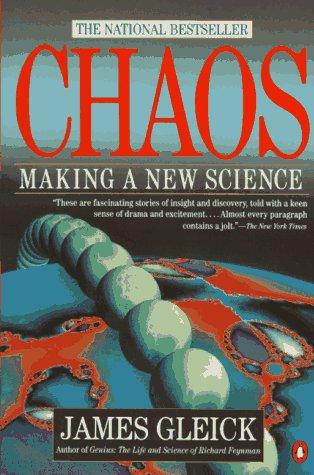
I went in expecting a math book and got something closer to a set of mini biographies with math running underneath it, which took me a chapter or two to make peace with. Gleick is telling you how chaos theory got discovered, who discovered it and in what order and how annoyed they all were with each other, more than he’s teaching you the theory itself. Once I recalibrated for that I liked it a lot better than I did on page thirty.
Some of it has aged the way you’d expect from an eighties science book, the wonder is a little quaint now, strange attractors and the Mandelbrot set aren’t the novelty they were when this came out, and there’s a reviewer instinct I share with a lot of people online who read it, wishing there were more actual math and less scene setting. But I’d rather have the scene setting done this well than have it done badly with more equations bolted on. The bit about Lorenz running his weather model and getting wildly different output from a rounding error is still the best explanation of the butterfly effect I’ve read anywhere, better than any pop science video that’s tried to compress it since.
It made me think about a floppy disk one of the reviewers mentioned, chaos programs bundled with an old book, leaving a computer running overnight generating fractal landscapes as a kid. I don’t have that memory myself but I recognized the shape of it, that specific kind of nerdy overnight patience that this subject seems to attract in people. This is not a beach read, it’s dense in the middle third, but the character work carries it. Four stars, would recommend to someone who wants the story of an idea more than the idea’s actual proof.